Explore how tarot cards can support self-reflection, emotional awareness and personal clarity when navigating life’s crossroads and important decisions.
Tarot is a reflective tool that helps you understand your feelings, see your situation more clearly, and make decisions with greater confidence.
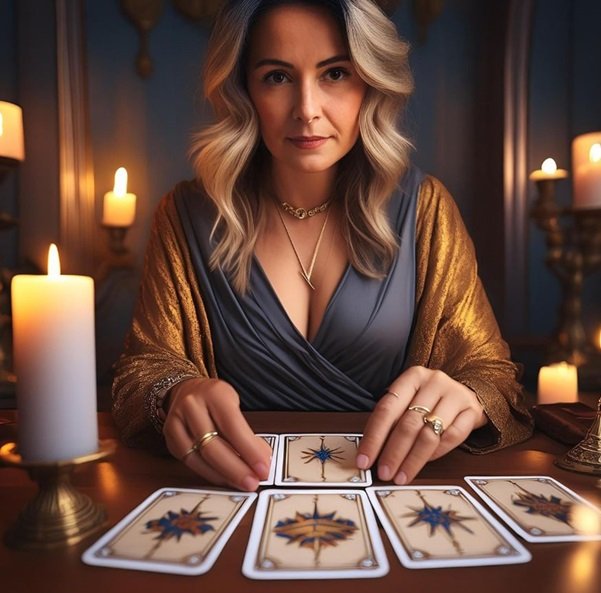
When people come for a tarot reading, they are often not just looking for “answers.” They are usually carrying confusion, emotional pressure, doubt, fear, hope, or a sense of being stuck.
Tarot gives them a calm space to slow down and look at what is happening inside them.
How Tarot Can Reflect What We Are Feeling
The cards can feel like:
- A mirror: “This is what I may be feeling but have not fully admitted.”
- A pause: “I can step back from the noise in my mind.”
- A language for emotions: “Now I can name what I am going through.”
- A new perspective: “Maybe there is another way to look at this.”
- A confidence builder: “I still have choices. I can move forward.”
1. A Mirror
Many people feel something inside, but they cannot clearly explain it. A tarot card can help bring that hidden feeling to the surface.
Customer feeling:
“I did not realise this was what I was actually feeling.”
Mind aspect:
The mind often hides emotions behind confusion, overthinking, or daily stress. Tarot gives a visual symbol that helps the person recognise what is already happening inside them.
2. A Pause
When people are stressed, their mind keeps jumping between worries, memories, fears, and possible outcomes. Tarot slows that mental noise down.
Customer feeling:
“I finally have a moment to breathe and think clearly.”
Mind aspect:
The mind needs space before it can process emotions properly. A reading creates a calm pause where the person can stop reacting and start reflecting.
3. A Language for Emotions
Some people know they feel “bad,” but they cannot name whether it is fear, guilt, grief, pressure, disappointment, or uncertainty. Tarot helps give shape to those emotions.
Customer feeling:
“Now I understand what I am going through.”
Mind aspect:
The mind feels more in control when emotions are named. Once a feeling has a name, it becomes easier to understand and manage.
4. A New Perspective
When someone is stuck, the mind often repeats the same thoughts again and again. Tarot can help them look at the same problem from another angle.
Customer feeling:
“I had not thought about it that way before.”
Mind aspect:
The mind can become trapped in one story: “I have no option,” “I failed,” or “I do not know what to do.” A reading can open another interpretation and reduce mental pressure.
5. A Confidence Builder
People often come to tarot when they feel powerless or unsure. A good reading does not make the decision for them. It helps them feel more connected to their own judgement.
Customer feeling:
“I feel clearer. I can take the next step.”
Mind aspect:
The mind feels anxious when there is uncertainty. Clarity reduces emotional overload and helps the person feel more capable of making a decision.
Tarot helps people slow down, understand what they are feeling, see their situation differently, and reconnect with their own inner clarity before making decisions.
How Tarot Reflects Feelings
At the core of how Tarot reflects feelings is a psychological mechanism called projection. When you look at a Tarot card, you aren't just seeing ink on paper; you are looking at a suggestive, slightly uncertain scene. Your brain automatically tries to make sense of the image by connecting it to your current emotional state.
For example, if you pull the Eight of Swords — a figure bound and blindfolded in a circle of swords — the same card may be interpreted differently depending on what you are currently experiencing.
- If you are feeling anxious: you might see a reflection of feeling trapped, helpless, or paralysed by overthinking.
- If you are seeking safety: you might see someone who is protected from the outside world while they turn inward.
Major vs. Minor Arcana
The Tarot deck is split into two main sections, which handle emotions at different depths:
The Major Arcana
The Major Arcana contains 22 cards. These reflect deep, overarching psychological states, major life transitions, and intense emotional chapters.
For instance, The Moon reflects deep-seated anxieties, illusions, and the confusing terrain of the subconscious, while The Star reflects a period of thoughtful hope, healing, and renewal.
The Minor Arcana
The Minor Arcana contains 56 cards. These reflect the day-to-day rise and fall of our moods and reactions.
They can show the immediate sting of a harsh word through the Three of Swords, the joy of a celebration with friends through the Three of Cups, or the exhaustion of carrying too many burdens through the Ten of Wands.
By giving abstract feelings a concrete image, Tarot allows us to step back, look at our emotions objectively, and process them with a bit of hidden space.